These are a few of the books that my friends and I read when we were teenagers in the late 1960s and early 1970s. We also read a lot of science fiction and fantasy as teenagers still do. My favorite SF book was Dune by Frank Herbert. And like the old fart that I am, I have zero use for the film adaptations.
The title of Go Ask Alice (1971) comes from the song by Jefferson Airplane, “Don’t you want somebody to love?” The book, written in the form of a diary, is about a teenage girl who ingests LSD and descends into a downward spiral of self-destruction. I read it when I was fourteen or fifteen. Did it warn me off drugs? No, it felt more predictive than cautionary. It turns out Go Ask Alice was not a teenage girl’s actual diary. The thing that made it powerful, however, was not that it was true, but that it could have been true. The story does capture the drug culture in an authentic way, and we all believed it was true. For some people the drug culture of the 1970s completely derailed the social and political progress we were aiming for. That culture was then criminalized by Nixon and his buddies who were looking for ways to incarcerate as many Black people as possible as well as White activists. The take-away from this book is to be careful of despair. Every day brings more news of the destruction of democracy. Don’t self-destruct. We can’t win if we obliterate ourselves.
Speaking of psychedelics, Tom Wolfe’s Electric Kool-Aid Acid Test is one of my favorite books of all time. While Go Ask Alice is framed as a dour cautionary tale, Electric Kool-Aid Test brings to light a group of zany freaks called the Merry Pranksters who make tripping (both literal and figurative) fun. They travel around the country in a bus called “Further,” having LSD parties. The book is written in the New Journalism or Gonzo style — meaning it’s a nonfiction book written like a novel. Did the book glorify drug use? Well, yeah. And it also depicted the ultimate failures of the hippie movement. Still, if you want get a sense of what drew millions of kids to hippie culture, this book is an essential read. Remember this was a period of racism, riots, assassinations, and war. And people were still trying to shake off the repression of the 1950s. The counterculture offered young people community and fun. It may not always have lived up to it professed values of peace, love, brotherhood and sisterhood, but it brought people together even if only for a while. Lessons for today? Form communities, be playful, and spread joy when you can. Be a prankster!
To be honest, I couldn’t remember why we all loved the book Trout Fishing in America (1967) by Richard Brautigan, but every cool person I knew had a copy of it. Brautigan was a poet and short story writer and novelist. He killed himself at the age of 49. According to his biography, he didn’t even like hippies, but the hippies and the hipsters and the counterculture loved him. The book isn’t really a novel. There’s no narrative to speak of. In a word, the writing is fanciful. It’s a trip through a madman’s imagination. Is it worth reading? Sure. Anything that alters your perspective without giving you a hangover is worth reading. Are there lessons for those of us in 2025 and beyond? Two things: One, let your imagination go wild. Two, don’t kill yourself.
The Autobiography of Malcolm X (1967) as told to Alex Haley was incredibly eye-opening to me, as a young white woman from the south. The book was published the year after Malcolm X was assassinated. If you don’t understand the Black Lives Matter movement or the concept of “white privilege,” this brilliant and painful book will make it abundantly clear that there are historical roots to our current problems. It’s also a really good story. A hero’s journey, if you will. Malcolm X, born Malcolm Little, was born in poverty. His only path out of that poverty was through crime, which eventually landed him in prison. And that’s where he had a spiritual awakening and joined the Nation of Islam, becoming first a leader but then rejecting the Nation of Islam teachings in order to become a Sunni Muslim. You can read the basic biographical information on Wikipedia. But if you read the book, you get to know the man as well as develop an understanding of the enormous toll that racism has taken on this country. Malcolm X’s autobiography demonstrates the power of a spiritual foundation when fighting injustice. And that’s just one take away for 2025.
Some really important books by White and Black feminist authors came out around 1970: I Know Why the Caged Bird Sings by Maya Angelou, The Female Eunuch By Gloria Steinem, The Bluest Eye by Toni Morrison, Sexual Politics by Kate Millet, and many others, but I didn’t read those books until I got a little older. In 1970, my friends and I were devouring the thriller, Looking for Mr. Goodbar, and Valley of the Dolls. Especially Valley of the Dolls! What a big, sprawling, melodramatic and oh-so-soapy narrative Jacqueline Susann delivered to us. The setting is the 1940s, 50s and into the 60s. And the themes run the gamut from addiction to pills (or “dolls”) to self-harm and suicide. Even though it was set in an earlier time period, the story of Valley of the Dolls sets the stage for the feminist revolution of the 60s and 70s. There was no greater illustration of the need for sisterhood and liberation than the messy, unfulfilled lives of the characters in that book. Then, of course, the gruesome murder of Sharon Tate, who starred in the movie adaptation, seared the story into our minds and hearts forever.
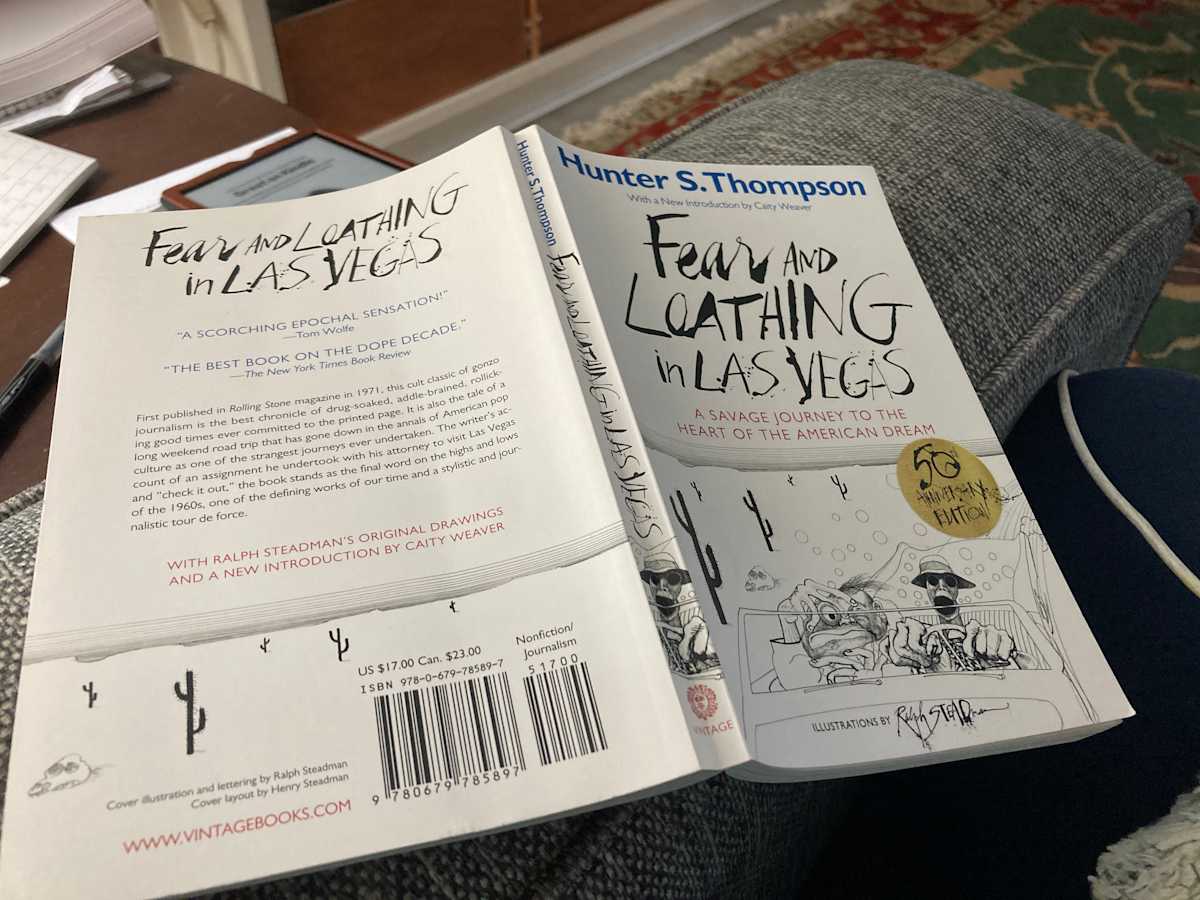
Other faves from the Era: One Flew Over the Cuckoo’s Nest; Fear and Loathing in Las Vegas; Steal this Book; Black Like Me; The Handmaid’s Tale; Fear of Flying; The Happy Hooker.
April 21, 2026
Books I Read in the 1970s